
AmaZeus: Merge & Shoot
Geisha Tokyo, Inc.Role Playing
4.2212.00 Reviews
- Version
- 1.4.48
- Installs
- 100.00K
- Age Rating
- Everyone 10+
Screenshots
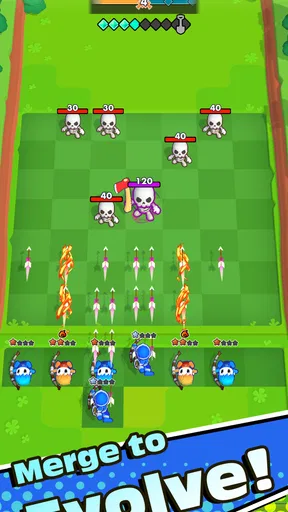
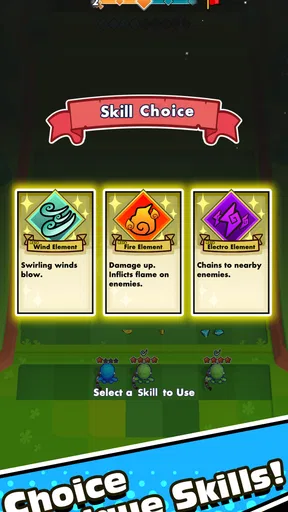

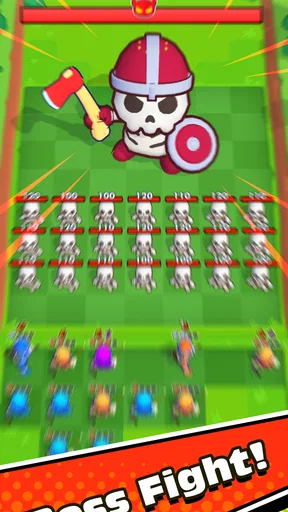

Our Review of AmaZeus: Merge & Shoot
 Analysis by Appyee
AmaZeus: Merge & Shoot is the kind of role-playing game I pick up when I want a short burst of strategy without committing to a long, complicated campaign. Its central appeal is easy to understand: it combines merging with adventure and shooting, creating a play style that asks me to think about preparation before I act. That combination gives it more personality than a standard action game, while keeping the first steps approachable for younger players and casual players.
After spending time with it, my overall view is positive but measured. The game’s best quality is the way it turns small decisions into a sense of progress. I am not simply tapping through battles; I am also considering what should be combined, what should be saved, and when a stronger option is worth chasing. The result is a light strategy experience that works particularly well in short sessions. It is not the right choice for someone looking for a deep role-playing system or a highly demanding shooter, but it has a clear place among relaxed mobile adventures.
Why the merge-and-shoot idea works
The most effective part of the design is the relationship between preparation and action. Merging gives me a planning layer, while shooting supplies the immediate feedback. Those two sides support each other: the decisions I make before a confrontation affect how confident I feel when the action begins. That structure makes even a brief play session feel more purposeful than a game built entirely around repeated taps.
I also like that the concept does not demand that I treat every moment as a test of reflexes. The adventure framing gives the experience a broader rhythm. I can think about my next move, make a change, and then see whether that decision helps when the shooting starts. For me, that is the strongest evidence that the game has an identity of its own instead of merely combining popular mobile mechanics for decoration.
The developer, Geisha Tokyo, Inc., keeps the presentation focused on that accessible loop. The store summary describes it as strategy meeting adventure, and that is a fair way to understand the mood. I would not call it a hardcore tactical game, but the strategic choices are meaningful enough to prevent the action from feeling completely automatic. Players who enjoy gentle optimization should find more to consider here than the brief store description suggests.
Small decisions matter more than fast tapping
One useful habit I developed was to avoid merging immediately just because a combination was available. In a game built around combining resources or units, the tempting move is often the quickest one. I found it more useful to pause and think about whether the immediate upgrade actually helped my next encounter. This is a simple adjustment, but it changes the experience from casual collecting into deliberate preparation.
That approach is especially helpful during an everyday situation such as a commute or a short break. I can begin a session by organizing what I have, make one or two careful choices, and then move into the action without needing a long uninterrupted block of time. If I only have a few minutes, the game still offers a satisfying decision point. If I have longer, I can spend more time refining the way I prepare.
Another practical tip is to treat the merge phase as part of the battle rather than as separate housekeeping. When I think of it only as inventory cleanup, I tend to make impulsive choices. When I treat it as a setup phase, I pay closer attention to what kind of result I am building toward. That mindset is one of the game’s less obvious strengths because it gives purpose to actions that might otherwise feel repetitive.
Approachable role-playing without a heavy learning curve
The role-playing category is important here, but the game feels lighter than a traditional, menu-heavy RPG. I can approach it without first learning a large set of systems or reading lengthy explanations. That makes it a comfortable recommendation for someone who likes the idea of character improvement but does not want to manage an elaborate party, a large equipment catalog, or a complicated story map.
The age rating of Everyone 10+ also fits the overall accessibility. I would consider it suitable for players who want something more thoughtful than a basic arcade title, while still preferring a welcoming tone. Parents should remember that the free download includes in-app purchases priced from $0.99 to $99.99 per item, so it is worth checking purchase settings before handing the device to a child.
The free entry point is useful because it lets a curious player understand the merge-and-shoot loop before deciding whether the game belongs on their regular rotation. I appreciate that approach for this kind of mobile title. The real question is not whether the concept sounds attractive, but whether the repeated cycle of preparing, combining, and acting remains enjoyable after the novelty fades.
Where AmaZeus is strongest in everyday play
My favorite use case is the short-session player who enjoys making progress in manageable pieces. The game suits the person waiting for an appointment, relaxing after work, or taking a few minutes away from a larger task. Its combination of planning and action gives those small sessions a sense of direction. I do not need to reserve an entire evening to feel that I have made a meaningful choice.
It is also a good fit for players who enjoy seeing systems interact. Someone who likes match-style combining but wants more of an adventure context may find the shooting layer refreshing. Likewise, a player who enjoys action games but sometimes wants a moment to prepare will appreciate having a planning step between bursts of activity. The appeal comes from the transition between those modes rather than from either mode alone.
For younger or less experienced players, the accessible structure can be an advantage. The basic idea is easy to explain: combine things, prepare for the next challenge, and take part in the action. Yet there is enough room for better decision-making to develop over time. I would use it as a gentle introduction to resource planning, especially for someone who finds conventional RPG menus intimidating.
There is also a useful mental distinction between a good move and a merely available move. I recommend new players decide what they want their next encounter to feel like before making several merges in a row. That small pause helps preserve useful options and avoids turning the preparation stage into random improvement. It is the kind of habit that generic game descriptions rarely mention, but it makes the experience noticeably more satisfying.
How it compares with familiar alternatives
Compared with a pure merge game, this title has a stronger sense of consequence because preparation leads into shooting and adventure. A pure merge alternative may be better for someone who wants a calm, almost puzzle-like routine with minimal interruption. I would choose AmaZeus instead when I want my combinations to lead directly into a more active moment.
Compared with a conventional mobile RPG, it is less demanding and easier to enter. A traditional RPG is likely to offer more character detail, deeper narrative structure, and broader long-term customization. Those games are better for players who enjoy studying builds or spending time with a complex world. AmaZeus is preferable when I want the feeling of progression without turning every session into administration.
Against a dedicated shooting game, the difference is even clearer. A specialist shooter will usually be the better choice for players who care primarily about precision, speed, or intense action. Here, shooting is part of a wider loop, so I do not expect it to satisfy someone seeking a competitive reflex challenge. Its advantage is variety: I get to make strategic choices before the action instead of relying only on moment-to-moment performance.
The friction that keeps it from being a universal recommendation
The same simplicity that makes the game inviting can also limit it. Players who need a highly detailed RPG may eventually want more depth than this lighter format provides. If my ideal game involves carefully tuning a large team, comparing many layers of statistics, or following an expansive story, I would look elsewhere. AmaZeus works best when I value a clear loop over a broad catalogue of systems.
The merge mechanic can also become less exciting if I approach it mechanically. Once the surprise of combining fades, the quality of the experience depends on whether I continue making intentional choices. Players who dislike repeated optimization may find the routine too familiar. In my experience, the game is more enjoyable when I use the merge stage to plan rather than rushing through it for the next action sequence.
The free-to-play structure deserves a realistic warning as well. Although the game costs nothing to start, the range of optional purchases means that spending can become part of the decision for some players. I would not recommend playing with an open-ended purchase approach, especially on a shared family device. Setting a clear budget, or simply treating the free version as a trial, keeps the experience more comfortable.
Another limitation is that the game’s broad appeal may feel like a compromise to specialists. It is not as purely relaxing as a merge-only title, not as deep as a full RPG, and not as intense as a dedicated shooter. That is not necessarily a flaw; it is the trade-off created by its hybrid design. Still, a player should understand that its strength is balance, not dominance in one particular genre.
Questions I would ask before installing
If I were deciding whether to try it, my first question would be whether the game supports short, repeatable sessions. For my playing habits, the answer is yes: its structure makes it easy to return for a quick planning-and-action cycle. Someone who prefers long story chapters or uninterrupted missions may find that rhythm less appealing.
I would also ask whether the game is appropriate for a younger player. Its Everyone 10+ rating makes it broadly accessible, but the presence of in-app purchases means adults should still manage the device’s purchase controls. That is especially important because an inexpensive first purchase and a much larger available purchase are very different situations for a family budget.
Another question is whether a modern phone is required. The game lists Android 6.0 as its minimum operating system, so it is available to users with older compatible Android devices. The current version is 1.4.48, which is useful to check when troubleshooting installation or deciding whether an update is needed. I would still keep normal expectations for performance on older hardware rather than assuming every device will feel identical.
Finally, I would ask what kind of satisfaction I want from the game. If I want the pleasure of improving a setup and then seeing it work in an active encounter, this is a convincing match. If I want a deep narrative, a serious competitive shooter, or a completely purchase-free experience, another category would be a better fit.
Who should play it, and who should skip it
I recommend it most strongly to casual role-playing fans, merge-game players who want more action, and families looking for an accessible strategy adventure for players aged ten and up. It is particularly well suited to people who enjoy making small improvements and seeing those choices reflected in the next part of play. The game rewards attention without demanding expert knowledge.
I would be more cautious recommending it to players who become bored with repeated loops quickly. The hybrid structure is appealing, but it still depends on returning to the same broad relationship between merging and shooting. If variety means completely different activities every few minutes, the game may not hold attention as well as a more expansive RPG.
I would also steer competitive shooter fans toward a specialist action title. AmaZeus should be approached as a strategy adventure with shooting in the mix, not as a precision-focused alternative to a dedicated shooter. Its strongest moments come from the choices surrounding the action, and that is where I think the game should be judged.
Geisha Tokyo, Inc. has created something easy to understand but not entirely mindless. The average rating of 4.2 from around 2.5 thousand ratings suggests that the concept has found a receptive audience, while more than 100 thousand installs show that it has reached beyond a tiny niche. Those figures do not replace personal taste, but they fit my impression that the game is approachable and distinctive enough to attract casual players.
My final verdict
AmaZeus: Merge & Shoot succeeds because its main idea is more than a label. Merging affects preparation, shooting gives those preparations a purpose, and the role-playing framework ties the two together into a compact adventure. I enjoyed it most when I slowed down, considered the next encounter, and treated each combination as a choice rather than an automatic upgrade.
It is not the deepest role-playing game on mobile, and its free-to-play purchases require sensible boundaries. Players wanting an intense shooter or a large, story-rich RPG should choose a more specialized alternative. But for someone who wants a free game with accessible strategy, active moments, and a manageable session length, I think it is worth trying.
With its Everyone 10+ rating, Android 6.0 compatibility, and straightforward entry point, it is easy to recommend as a low-pressure starting point. My advice is to play patiently, avoid merging without a reason, and decide in advance how you want to handle optional purchases. Used that way, it offers a pleasant balance of planning and action rather than pretending to be something more complex than it is.
Verdict
Strengths of AmaZeus: Merge & Shoot
- Simple merge-and-shoot gameplay is easy to learn.
- Short levels work well for quick gaming sessions.
- Weapon upgrades provide a satisfying sense of progression.
- Bright visuals make the action easy to follow.
- Playable offline, making it convenient while traveling.
Limitations of AmaZeus: Merge & Shoot
- Gameplay can become repetitive after extended play.
- Difficulty may feel uneven between some stages.
- Limited strategic depth compared with larger shooter games.
- Frequent ads may interrupt the experience for free players.
- Progression can feel slow without optional purchases.
Other Releases by Geisha Tokyo, Inc.
View All
Traffic Run!: Driving Game
Action4.0
Similar Picks in This Category
View All
Hair Dye
CrazyLabs LTD4.4

Monster High™ Beauty Salon
CrazyLabs LTD4.5

Bus Simulator - Bus Games 3D
Jima Apps4.4

Flight Pilot: 3D Simulator
Wildlife Studios4.1


Super Stylist Fashion Makeover
CrazyLabs LTD4.4
Frequently Asked Questions
What is AmaZeus: Merge & Shoot?
AmaZeus: Merge & Shoot is a casual action game that combines merge-based progression with shooting gameplay. You typically combine matching items or units to create stronger versions, then use your improved arsenal to face enemies and complete stages. The mix of simple merging and quick combat makes it approachable for short play sessions while still offering upgrade decisions and gradual progression.
How does the gameplay work in AmaZeus: Merge & Shoot?
The main gameplay loop revolves around merging similar objects, weapons, or characters to improve their level and effectiveness. Once your setup is ready, you engage opponents through shooting-focused encounters. As you advance, enemies and challenges become more demanding, so choosing what to merge and when to spend resources becomes important. The controls are designed to be accessible, making the game suitable for casual players.
Is AmaZeus: Merge & Shoot free to download and play?
AmaZeus: Merge & Shoot can generally be downloaded without an upfront purchase, but the game may include optional in-app purchases. These purchases can provide extra resources, boosts, or other conveniences, while normal progression is usually available through regular play. Advertising may also be included, depending on the version and platform. Before downloading, check the store listing for current pricing, ads, and purchase details.
Does AmaZeus: Merge & Shoot require an internet connection?
The game may allow some basic gameplay to continue without a constant connection, particularly during certain single-player sections. However, internet access can be required for advertisements, cloud features, account-related functions, updates, event content, or purchases. Availability may vary between Android and iOS versions. If you plan to play while traveling or offline, test the installed version first because some features may not work without connectivity.
Is AmaZeus: Merge & Shoot suitable for children?
AmaZeus: Merge & Shoot uses accessible mechanics, but parents should review its age rating and store information before allowing children to play. The shooting theme, advertising, and optional in-app purchases may not be appropriate for every age group. If younger players use the app, it is advisable to enable parental controls, restrict purchases, and check the privacy permissions requested by the version available on the device.
Play our best games!


